Cooperation and implementation of a bilateral project between the Geographical Institute “Jovan Cvijić” of the Serbian Academy of Sciences and Arts and the Institute of Geography of the Romanian Academy

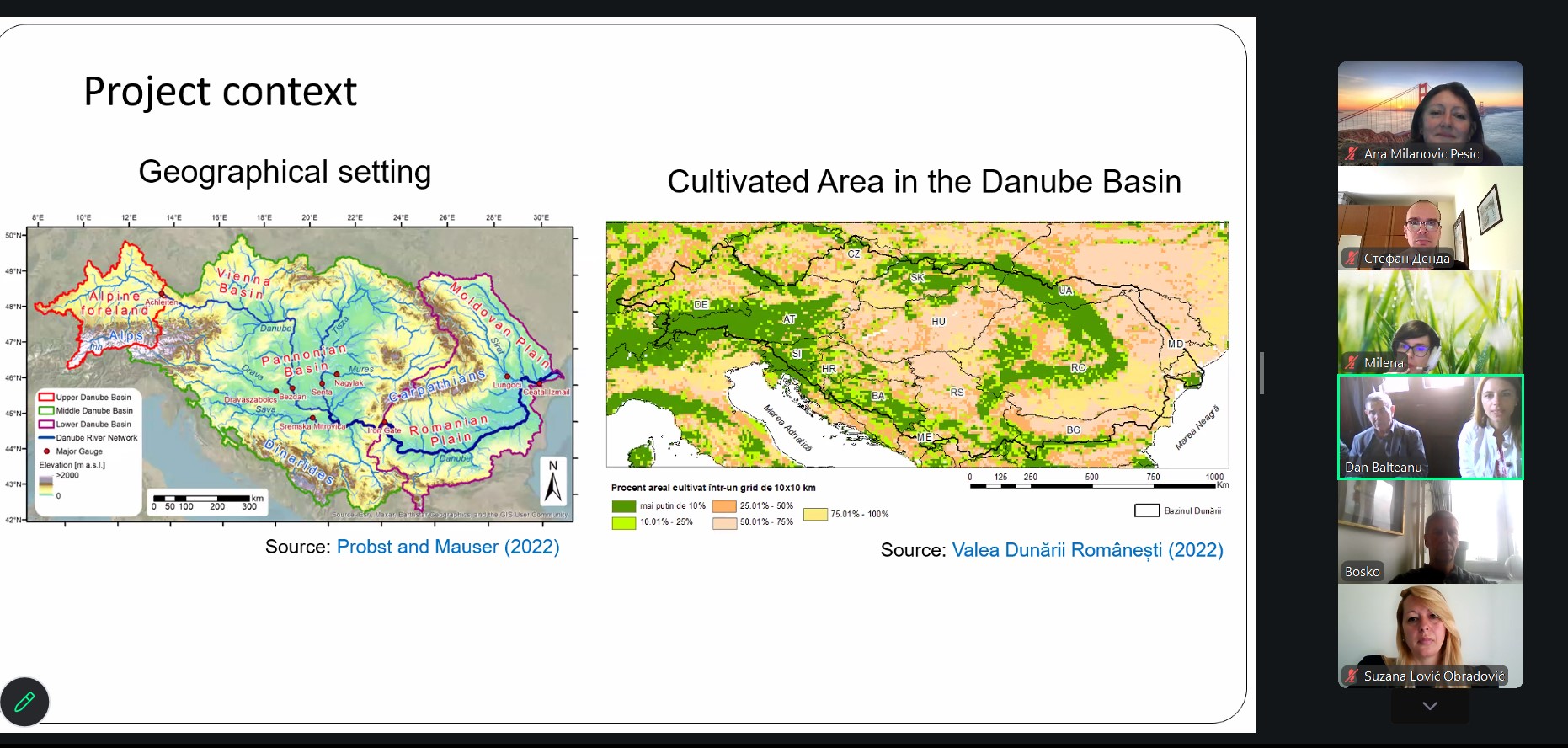
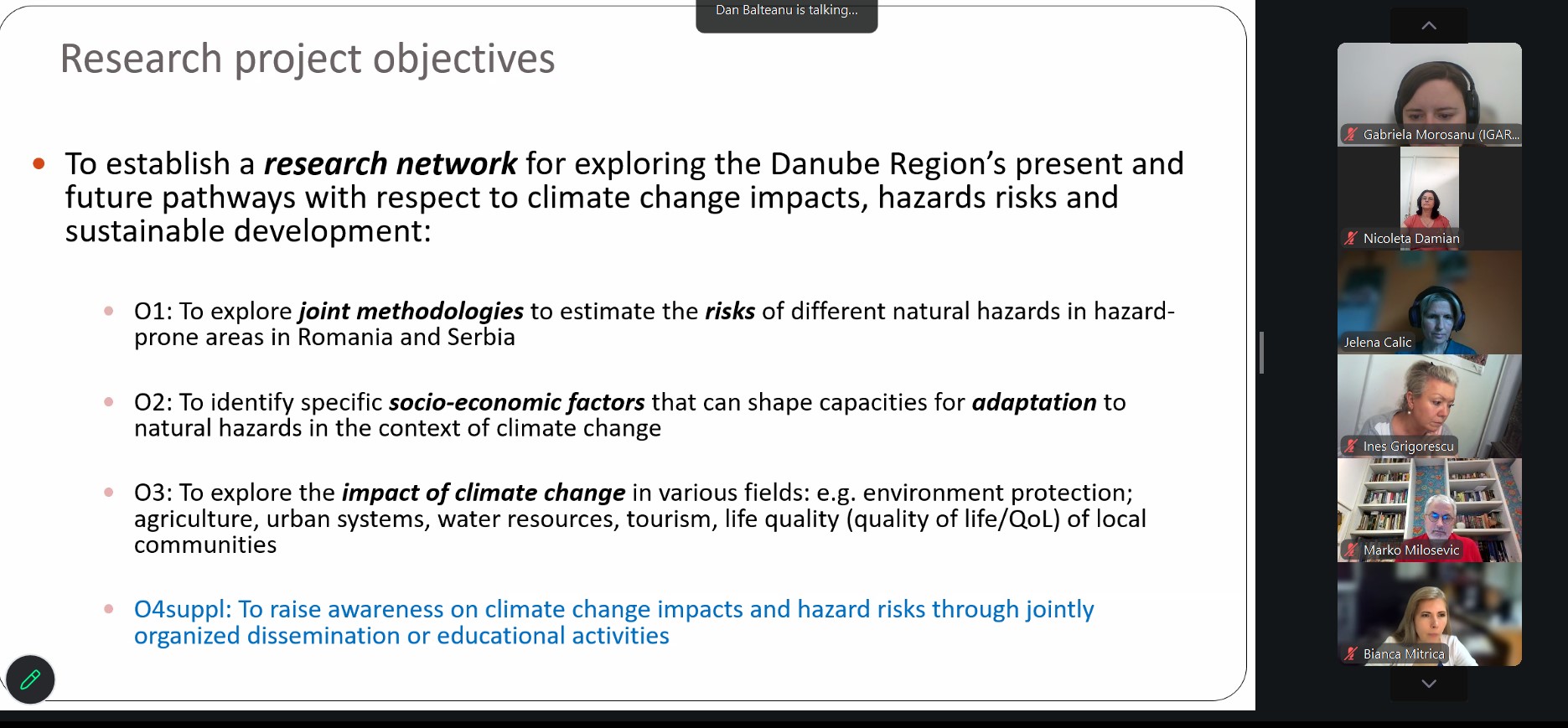
Within the framework of the Joint Research Projects Programme of the Serbian Academy of Sciences and Arts and the Romanian Academy for the 2025–2027 period, the Geographical Institute “Jovan Cvijić” SASA and the Institute of Geography are implementing the project “Regional impacts of climate change in the Danube Basin – comparative analyses of natural hazards and socio-economic development in Romania and Serbia”.

The cooperation is aimed at developing shared methodologies, establishing a long-term research network, publishing joint papers and preparing new international project proposals.
An initial meeting of the project leaders, Dr Ana Milanović Pešić from the Serbian side and Dr Mihaela Sima from the Romanian side, joined also by associates Dr Stefan Denda (Serbia) and Dr Diana Dogaru (Romania) was held in January 2026. The meeting focused on the main directions of cooperation and planned activities.

As one of the initial activities in the project’s implementation, a Memorandum of Cooperation between the Geographical Institute “Jovan Cvijić” SASA and the Institute of Geography RA was signed in May 2026.

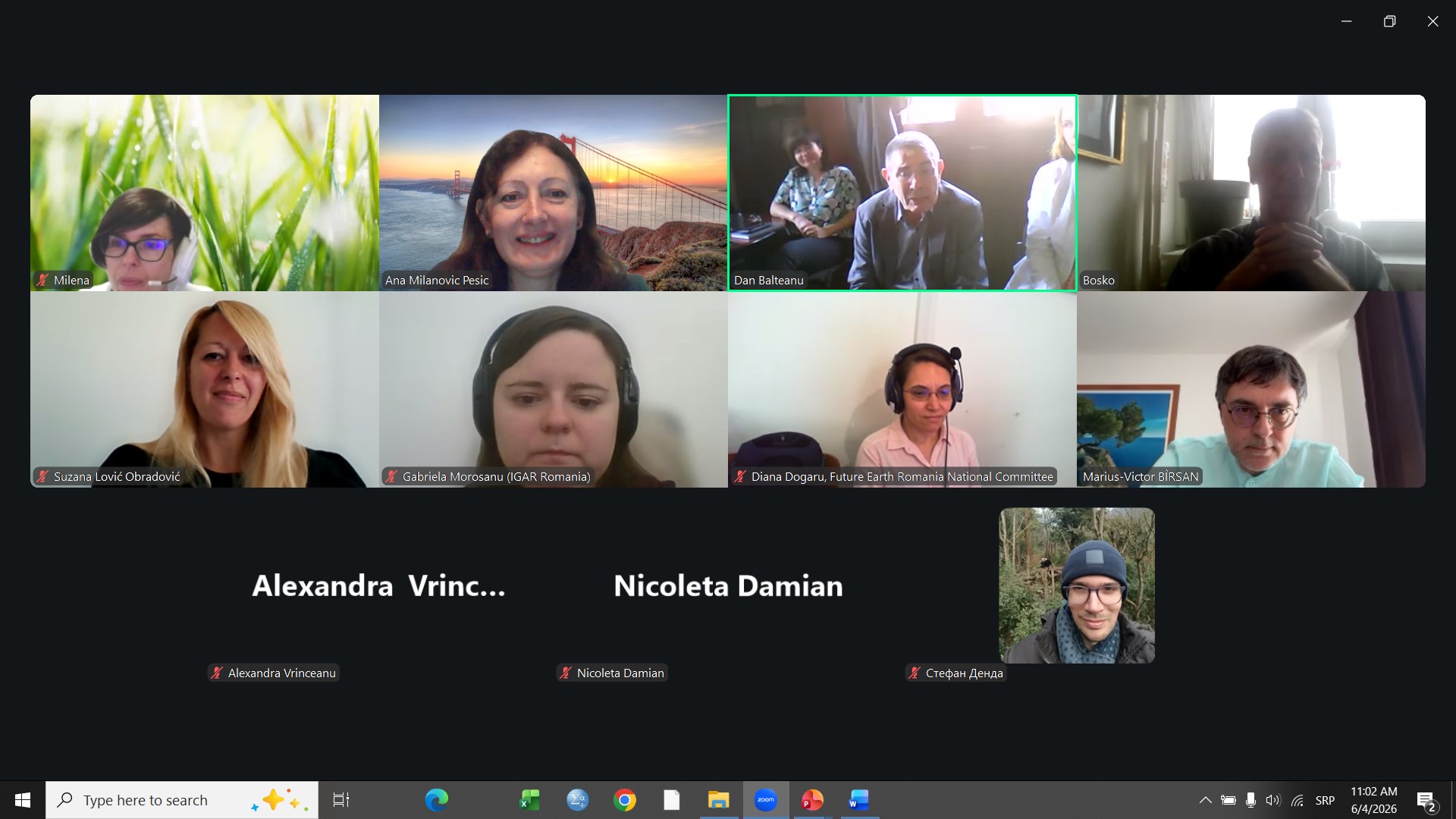
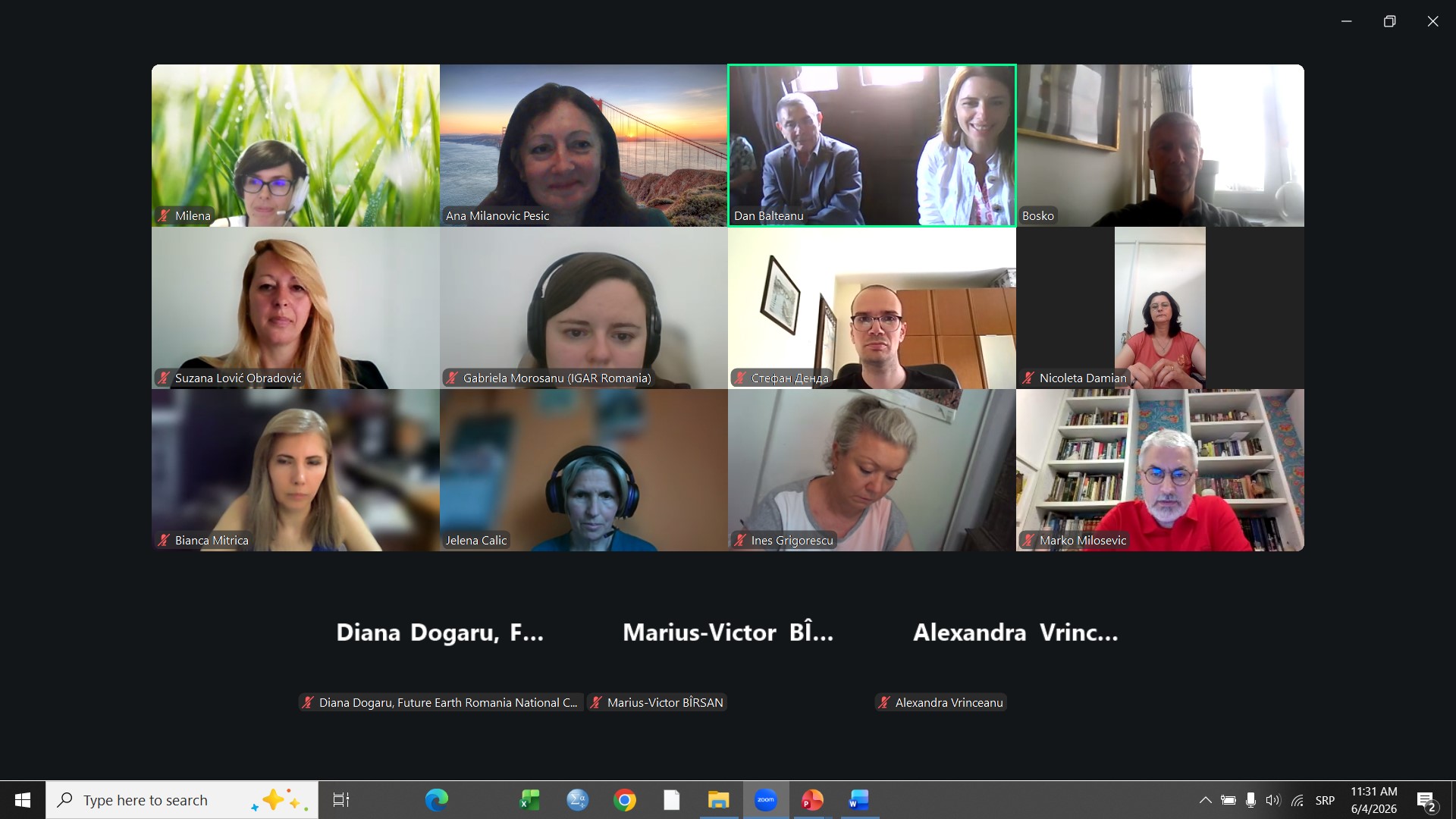
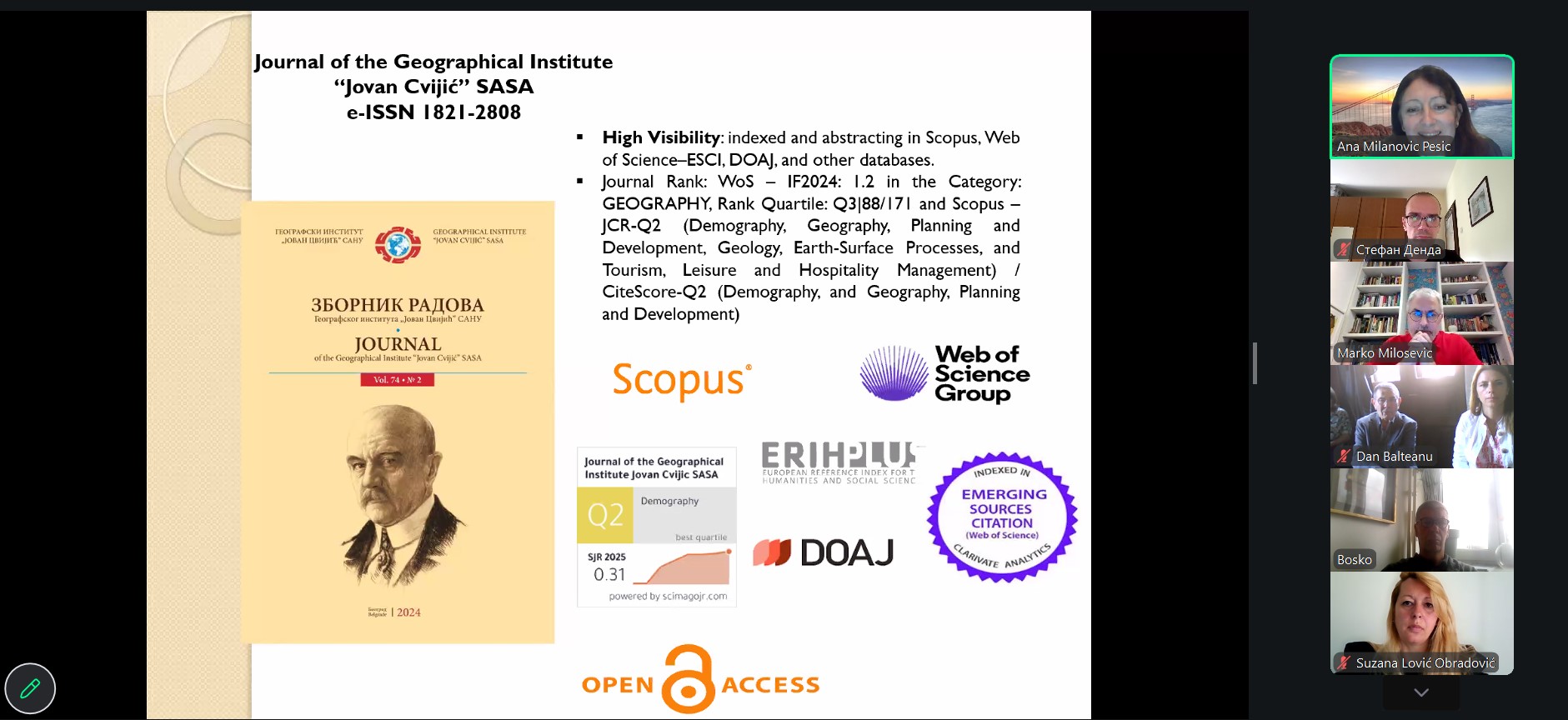
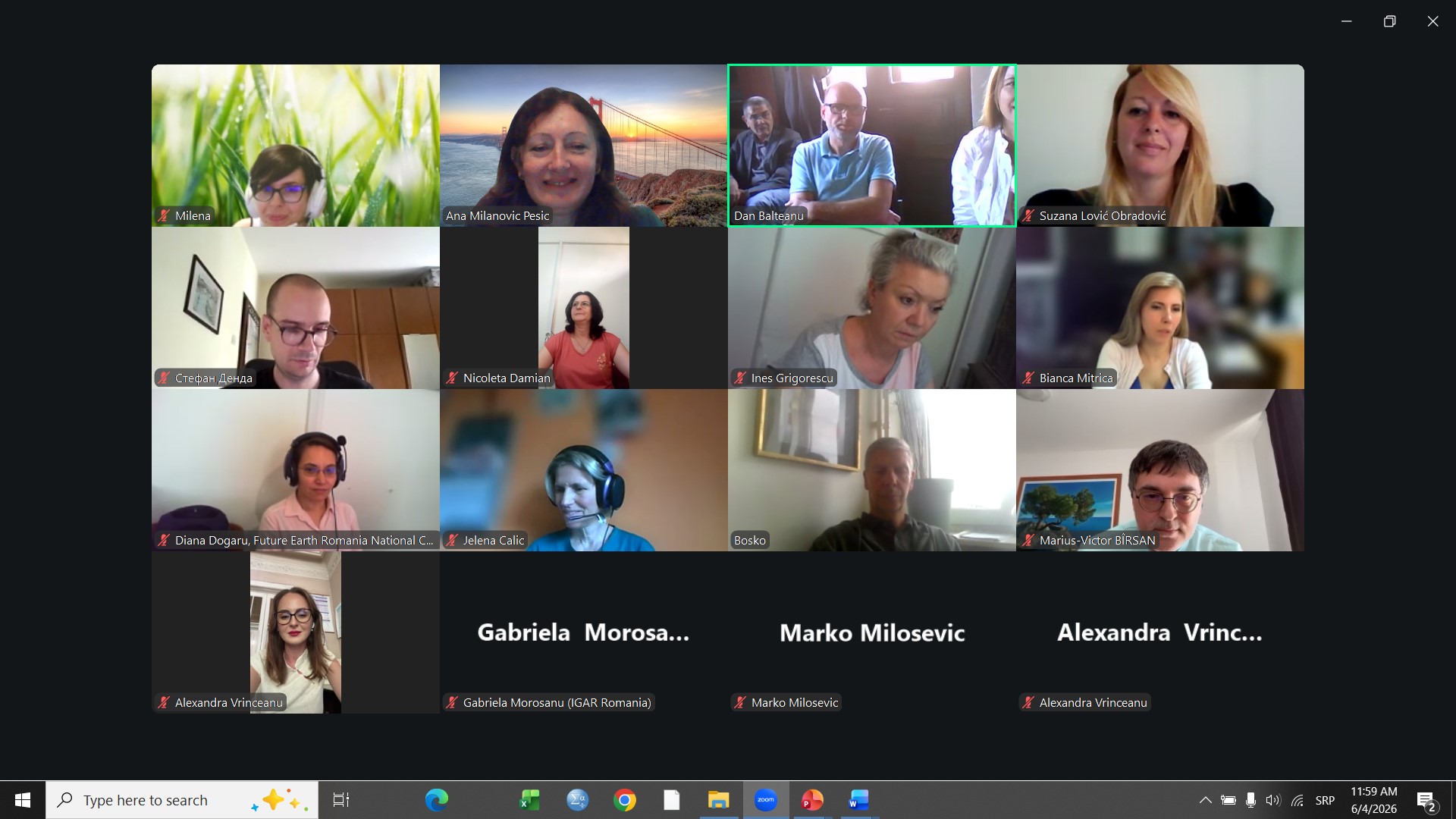
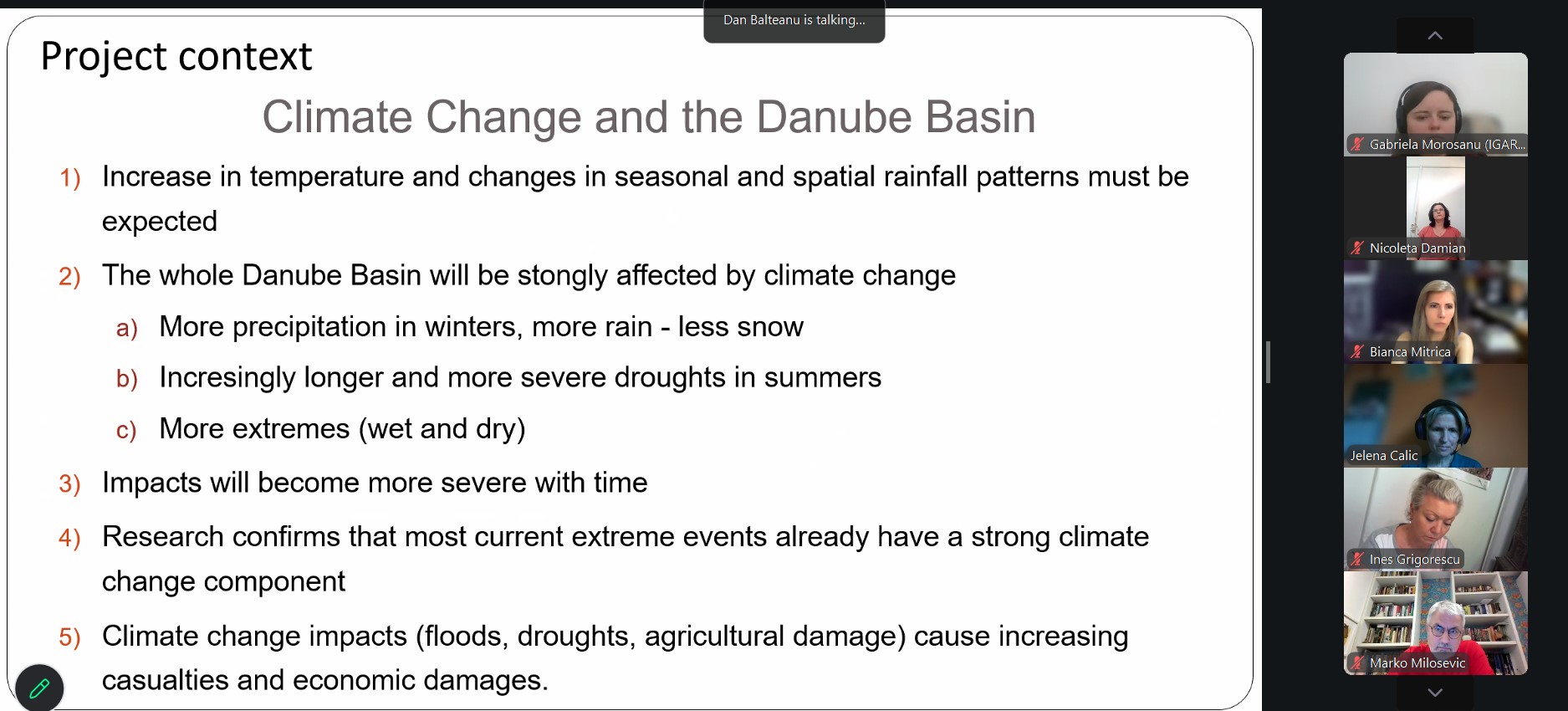
The project teams held their kick-off meeting on 4 June 2026. The research directions of both institutions, the team members and the next steps in the cooperation were presented. In addition to the project leader, the Serbian team includes Dr Mirjana Rašević, Corresponding Member of SASA (project coordinator), Dr Milan Radovanović, Dr Jovana Brankov, Dr Darko Vuković, Dr Boško Milovanović, Dr Marko D. Petrović, Dr Jelena Ćalić, Dr Milena Panić, Dr Marko V. Milošević, Dr Stefan Denda and Dr Suzana Lović Obradović. The Romanian team includes Academician of RA, Dr Dan Balteanu, Dr Monica Dumitrascu, Dr Diana Dogaru, Dr Ines Grigorescu, Dr Gheorghe Kucsicsa, Dr Marius Birsan, Dr Bianca Mitrica, Dr Nicoleta Damian, Dr Gabriela Morosanu, Dr Laura Lupu, and Dr Alexandra Vrinceanu.

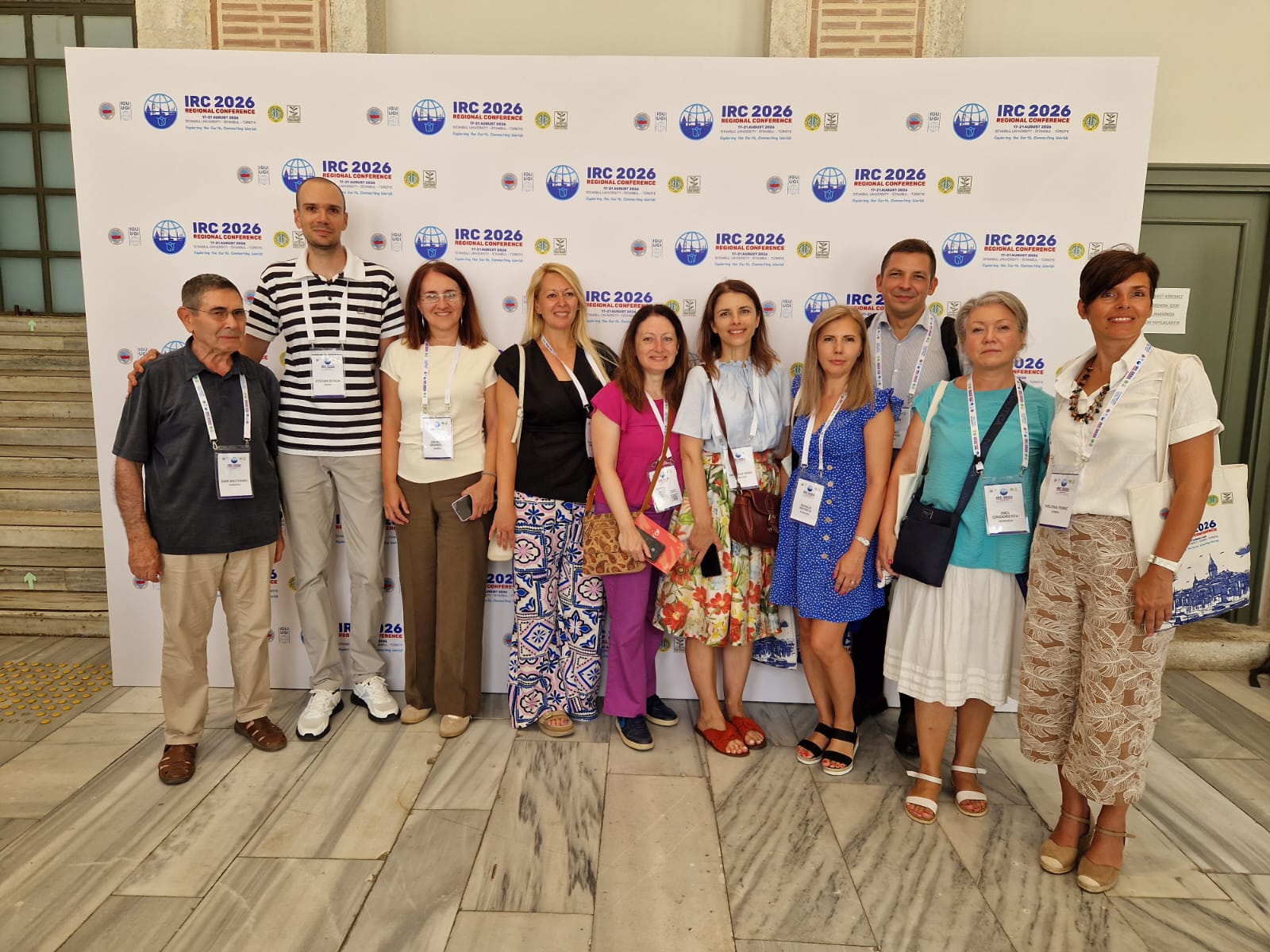
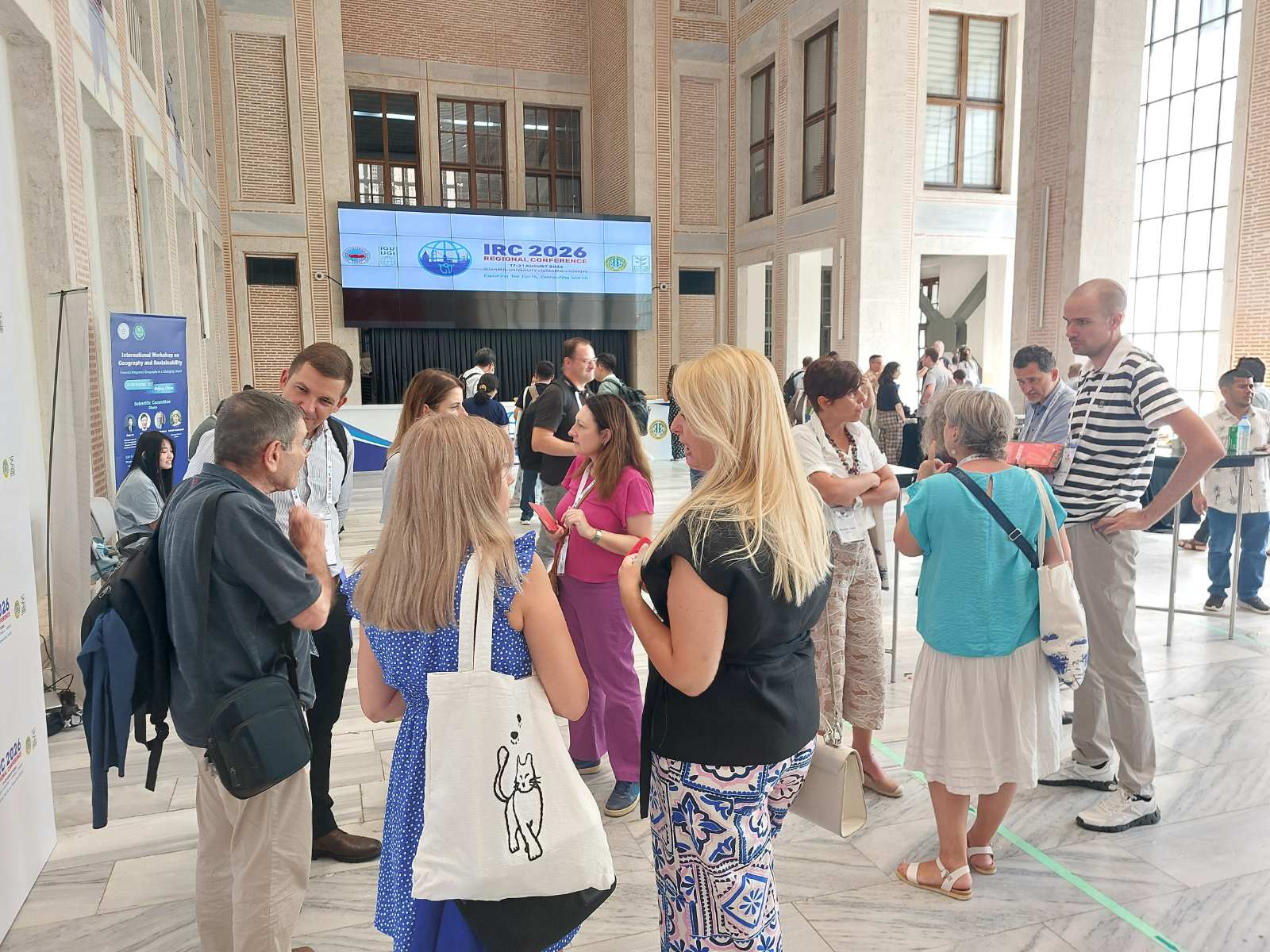
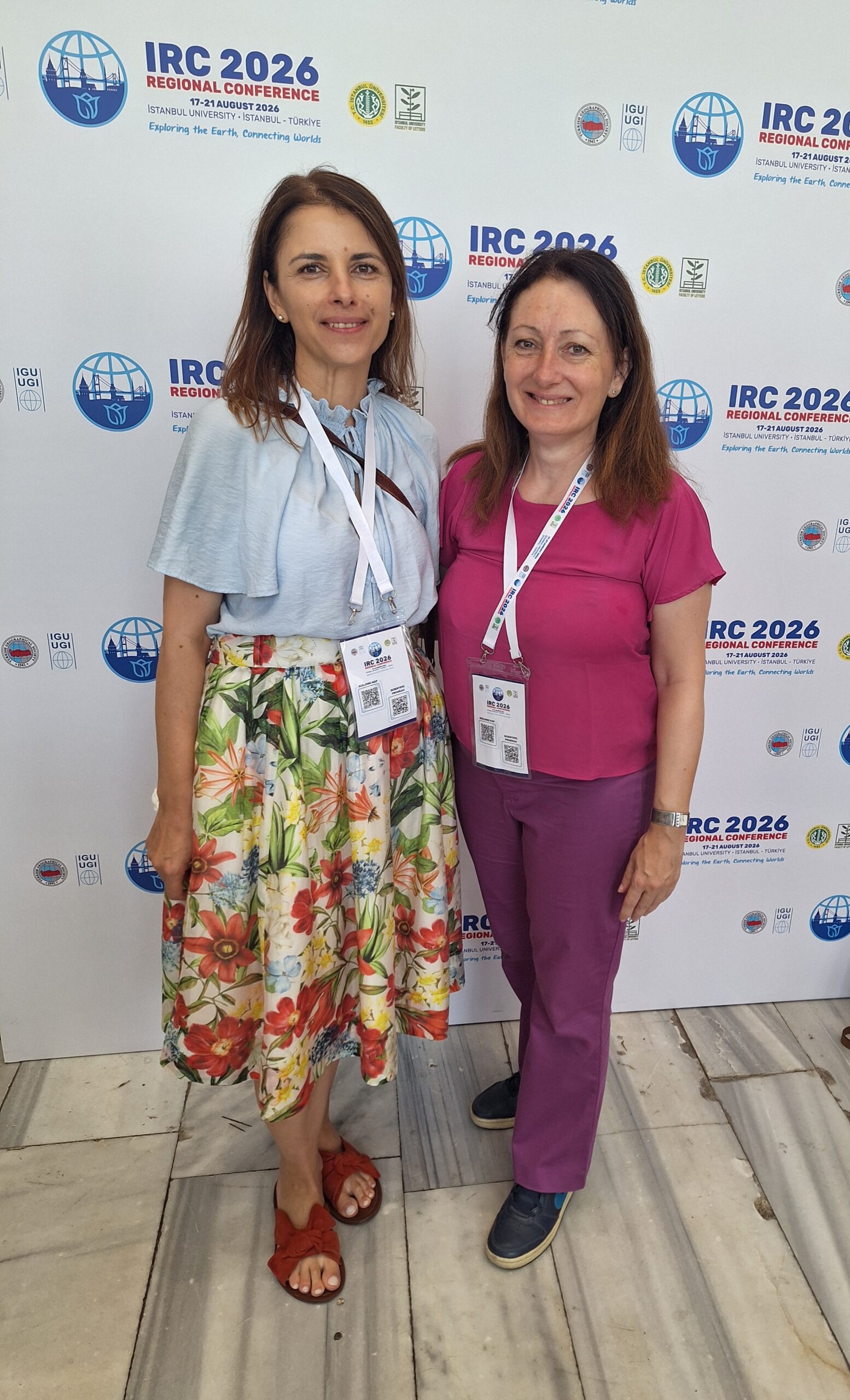
Members of the teams also met on the margins of IRC 2026 (IGU Regional Conference 2026), held in Istanbul from 17 to 21 August 2026, and discussed planned activities for the project’s implementation. Reciprocal research visits in Serbia and Romania are planned and will be carried out by the end of 2026.
Source: Stefan Denda and Ana Milanović Pešić

Gallery:

Deliver sAfe and Social Housing (DASH)

Project ID: 101086488
Project leader: Sónia Alves, PhD
Project leader for the Geographical Institute “Jovan Cvijić” SASA: Zlata Vuksanović-Macura, PhD
Project duration: January 1, 2023, to December 31, 2026
Sponsors: European Union Programme HORIZON Europe
Executive contractors: Institute of Social Sciences, University of Lisbon, Portugal
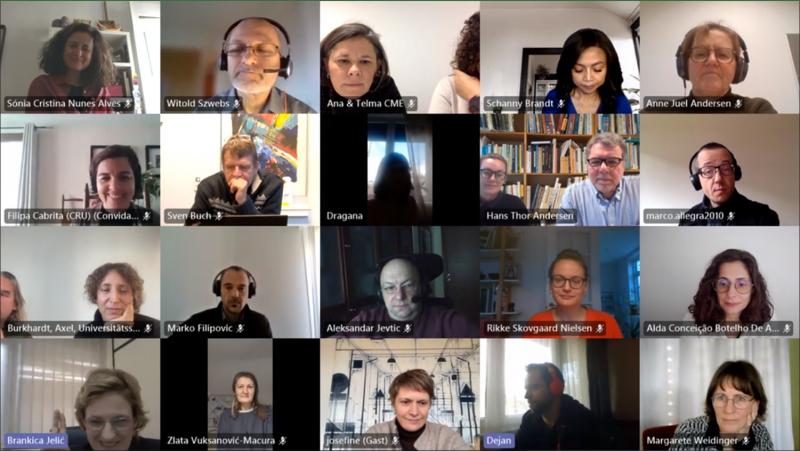
List of participants: Zlata Vuksanović-Macura, Dragana Miljanović, Dejan Doljak and Marko Filipović
Project Beneficiaries: Geographical Institute “Jovan Cvijić” SASA, City Housing Agency Čačak, Association of Urban Planner of Serbia, Aalborg University, Copenhagen, Himmerland Boligforening, Aalborg Kommune, University of Stuttgart, Universitatsstadt Tubingen, Association INWOLE, Municipal de Evora, Cooperativa Integral Minga

Project website: www.dashousing.eu

Geographical Institute “Jovan Cvijić” SASA is involved in the Deliver sAfe and Social Housing (DASH), a European Union funded project under the Programme Horizon Europe – Marie Skłodowska-Curie Actions granted for 48 months.

DASH brings together four academic and research partners and eight partner municipalities and associations from Denmark, Germany, Portugal and Serbia. The project centres around safe and social housing as an essential reference point for an improved livelihood and a more socially sustainable future. DASH aims to generate new ideas about promoting more sustainable and safer housing and converting these new ideas into concrete housing products, processes and services.

Photos:

Multilateral project “Geomorphological interpretation of photogrammetry and laser scanning data in the study of torrential watersheds

Project ID: DS-15

Project leader: Dr. Valentina Nikolova

Project coordinator in Serbia, employed at the Geographical Institute “Jovan Cvijić”, SASA: Dr. Ana M. Petrovic

Project holders: University of Mining and Geology “St. Ivan Rilski” in Bulgaria, Geographical Institute “Jovan Cvijić” SASA, Geosciences Rennes of the University of Rennes, Global Change Research Institute of the Czech Academy of Sciences

Partner organization on the project in Serbia: Faculty of Geography, University of Belgrade

Project duration: from July 1, 2023 to June 30, 2025

Sponsors: Ministry of Science, Technological Development and Innovation of the Republic of Serbia, Program of international scientific cooperation of importance for the Republic of Serbia – Program for financing multilateral scientific and technological cooperation in the Danube region


The Geographical Institute “Jovan Cvijić” SASA is involved in the project “Geomorphological interpretation of photogrammetry and laser scanning data in the study of torrential basins”, which lasts 48 months. The implementation of the project in Serbia is financed by the Ministry of Science, Technological Development and Innovation of the Republic of Serbia.

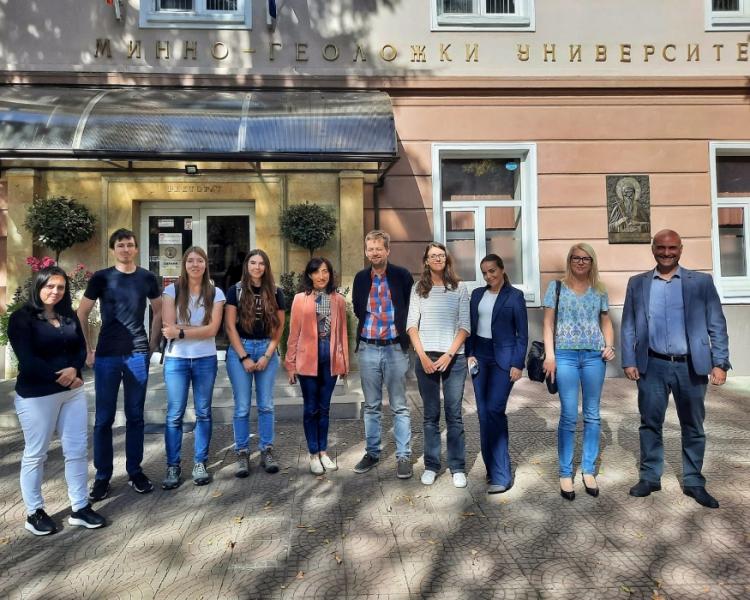
The multilateral project brings together 6 academic and research organizations from Serbia, Bulgaria, France and the Czech Republic. The project focuses on the analysis of sediment granulation and orientation using classic and modern methods employing UAS (Unmanned Aerial System) and Terrestrial Laser Scanning (TLS) technologies. The general goal of the project is to support the investigation of torrential phenomena using multisensory methods and the mapping of hydro-geomorphological risks of torrential floods and debris flows in the watersheds of hilly-mountainous areas.


Successful Implementation of the Bilateral Scientific and Technological Cooperation Project between the Republic of Serbia and the People’s Republic of China

Project leader: Dr Darko Vuković
Project duration: 2021-2023
Sponsors: the Ministry of Science, Technological Development and Innovation of the Republic of Serbia and the Ministry of Science of the People’s Republic of China.
Executive contractors: the Institute of Geographic Sciences and Natural Resources Research of the Chinese Academy of Sciences in Beijing, the Geographical Institute “Jovan Cvijić” SASA

During the 2021–2023 period, the Geographical Institute “Jovan Cvijić” SASA successfully implemented a bilateral scientific and technological cooperation project between the Republic of Serbia and the People’s Republic of China entitled Comparative Research on Sino-Serbia Disaster Risk Prevention and Control from the Viewpoint of Multi-Disasters.

The project was carried out in cooperation with the Institute of Geographic Sciences and Natural Resources Research of the Chinese Academy of Sciences in Beijing. On the Serbian side, the project activities were led by Dr Darko Vuković, with the participation of researchers from the Geographical Institute “Jovan Cvijić” SASA, in accordance with the decisions of the competent institutions of the Republic of Serbia and the governing bodies of the Institute. The project was funded by the Ministry of Science, Technological Development and Innovation of the Republic of Serbia and the Ministry of Science of the People’s Republic of China.

The main scientific objective of the project was to provide an integrated analysis of methods and techniques for assessing multi-hazard risks in Serbia and China, identify spatial patterns of high risk, and improve preventive and management measures in the field of multi-risk governance. A distinct segment of the research also focused on hazards triggered by the COVID pandemic in the markets of Serbia and China.

As part of the project, from 25 November to 1 December 2023, the Geographical Institute “Jovan Cvijić” SASA hosted a delegation from the Institute of Geographic Sciences and Natural Resources Research of the Chinese Academy of Sciences. The delegation included Professor Erfu Dai, the Chinese project leader, together with team members Shaohong Wu, Jiangbo Gao, and Lulu Liu. During the visit, a working meeting was held with the aim of strengthening institutional cooperation, preparing joint publications, and defining future directions of scientific collaboration.

An important part of the visit by the Chinese delegation was devoted to field research in Serbia. On that occasion, the delegation visited loess profiles in Fruška Gora National Park, mega landslides along the Belgrade–Smederevo route, as well as the geological profile of the Boljetinska River Canyon in Đerdap National Park and Geopark. During the fieldwork along the right bank of the Danube, the Chinese colleagues became acquainted with the genesis, dynamics, and consequences of the activation of several major landslides, including Cigansko Brdo, Rujište, Jugovo, and Provalija.

On the other hand, from 18 to 26 December 2023, a delegation from the Geographical Institute “Jovan Cvijić” SASA, consisting of Dr Darko Vuković, Dr Ana Milanović Pešić, Dr Marko D. Petrović, and Dr Stefan Denda, conducted a study visit to the People’s Republic of China. During their stay in Beijing, several working meetings were held with colleagues from the partner institution, where opportunities for continued cooperation through new joint projects and co-authored papers in international scientific journals were discussed. A particularly valuable part of the visit was the opportunity to learn more about the organization, history, and scientific work of the Institute of Geographic Sciences and Natural Resources Research of the Chinese Academy of Sciences, which further strengthened institutional ties and laid the foundation for future cooperation.

After the stay in Beijing, the research activities continued in Sichuan Province, in Chengdu and Dujiangyan. As part of the fieldwork, the Serbian delegation visited Dujiangyan, one of the most important historical irrigation and flood control systems in China, which remains in operation to this day. In addition, the team visited Wenchuan, the site of the catastrophic 2008 earthquake, which stands as one of the most significant contemporary examples of a natural disaster in China and an important case for research in the fields of risk management and post-disaster recovery.

The successful implementation of this project confirms the importance of international scientific cooperation in the fields of geographical research, natural hazard assessment, and multi-risk management. Through joint research, field activities, scientific exchange, and the preparation of publications, the Geographical Institute “Jovan Cvijić” SASA made an important contribution to strengthening cooperation between Serbia and China and to the further development of comparative research in this field.

Current and predicted distribution of pseudoscorpions (Arachnida: Pseudoscorpiones)

Project reference number:
Project leader: Nina B. Ćurčić
Project authors: Nina B. Ćurčić
Duration: September 27, 2021 – October 1, 2021
Sponsors: “SYNTHESYS+” program funded by the European Commission
Project participants: Nina B. Ćurčić


Dr. Nina B. Ćurčić visited the Natural History Museum in Vienna, Austria, from September 27 to October 1, 2021, where she worked on the research project “Current and predicted distribution of pseudoscorpions (Arachnida: Pseudoscorpiones) in Serbia and Montenegro,” which she leads. The project is being implemented within the framework of the SYNTHESYS+ program, funded by the European Commission.

Glac – Pannonia Project

Project ID: x
Project cycle: March – September 2018
Project leader: Prof. Richard Miles, The University of Sydney
Team leader within the Geographical Institute „Jovan Cvijić“ SASA: Jelena Ćalić, PhD
Project authors: –
Project duration: March 1, 2018, to September 30, 2018
Sponsors: Department of Classics and Ancient History, The University of Sydney
Executive contractors: Department of Classics and Ancient History of the University of Sydney and Archaeological Institute from Belgrade


Geographical Institute „Jovan Cvijić“ of the Serbian Academy of Sciences and Arts participates in the „Glac – Pannonia Project“, led by the Archaeological Institute from Belgrade and the Department of Classics and Ancient History, The University of Sydney.

The subject of research is the archaeological site „Glac“ close to the town of Sremska Mitrovica, with the remnants of the Roman imperial palace, founded by the emperor Maximianus Herculius at the end of the 3rd and beginning of the 4th century AD. The aim of the project is to identify settlement patterns, to reconstruct paleo-landscapes and to study various aspects related to the environment during the periods of Antiquity and Late Antiquity. The task of the Geographical Institute team is to process and analyse the spatial data following the CSIRO methodology, which includes production of geomorphological and geographical maps in three different scales, including the soil and vegetation data, as well as the preparation of the written interpretation of geomorphological history of this area.