Call for articles for special issue of international journal Remote Sensing

Respected Colleagues,

We invite you to contribute with your scientific articles to the quality of the forthcoming Special Issue Extraterrestrial Influences on Remote Sensing in the Earth’s Atmosphere of the international journal Remote Sensing (ISSN 2072-4292), indexed in Web of Science, IF2019:4.509 и Scopus: Q1).

Submission Deadline: 30.11.2021.

Guest Editors:

Dr. Aleksandra Nina, The Astrophysics and Ionospheric Laboratory, Institute of Physics Belgrade, University of Belgrade, Belgrade, Serbia
Prof. Dr. Milan Radovanovic, Geographical Institute “Jovan Cvijic” of Serbian Academy of Sciences and Arts, Belgrade, Serbia
Prof. Dr. Luka Č. Popović, Astronomical Observatory, Belgrade, Serbia


Date: 18.11.2020.

Source: https://www.mdpi.com/journal/remotesensing/special_issues/Extraterr_Atmo


Special Issue Information

Propagation properties of the electromagnetic signals used for different kinds of remote sensing depend on the atmospheric parameters, such as the electron density and temperature. Spatial and temporal variations of these parameters affect signal propagations and, consequently, corresponding applications of the used technique such as observations and positioning. One of the most important sources of atmospheric disturbances is solar electromagnetic and charged particle radiation. In addition, cosmic rays, including both electromagnetic and particle radiation, can provide enough intensive perturbations of the outer Earth’s layer that can affect the signal propagation path. The sources of these perturbations can be relatively close to our planet, but also can be located in the deep Universe. Perturber intensities, lengths and locations in the Earth’s atmosphere can be quite different, which can induce various signal deviations.

The aim of this Issue is to present the latest research linking events and processes in outer space with changes in the propagation of the satellite and ground-based signals used in remote sensing. This special issue welcomes papers that explore the following:

– Detection of the extra-terrestrial radiation and modeling of the induced atmospheric disturbances using different kinds of remote sensing techniques;

– Changes in signals used for remote sensing and the quality of their applications during influences of extra-terrestrial events;

– Influences of events from outer space on the detection of terrestrial or extra-terrestrial events and corresponding modeling, such as masking less intense perturbations with solar influences, etc.

Additionally, other papers that deal with the Earth’s atmosphere’s perturbations due to extra-terrestrial events (e.g., meteor perturbations) that may affect signal propagation are welcome.

Manuscript Submission Information

Manuscripts should be submitted online at www.mdpi.com by registering and logging in to this website. Once you are registered, click here to go to the submission form. Manuscripts can be submitted until the deadline. All papers will be peer-reviewed. Accepted papers will be published continuously in the journal (as soon as accepted) and will be listed together on the special issue website. Research articles, review articles as well as short communications are invited. For planned papers, a title and short abstract (about 100 words) can be sent to the Editorial Office for announcement on this website.

Submitted manuscripts should not have been published previously, nor be under consideration for publication elsewhere (except conference proceedings papers). All manuscripts are thoroughly refereed through a single-blind peer-review process. A guide for authors and other relevant information for submission of manuscripts is available on the Instructions for Authors page. Remote Sensing is an international peer-reviewed open access semimonthly journal published by MDPI.

Please visit the Instructions for Authors page before submitting a manuscript. The Article Processing Charge (APC) for publication in this open-access journal is 2200 CHF (Swiss Francs). Submitted papers should be well formatted and use good English. Authors may use MDPI’s English editing service prior to publication or during author revisions.

 

Engagement in the Kaufman Lab, University of Wisconsin–Madison (USA)

Dr. Marko D. Petrović is involved in the work of the Kaufman Lab for the Study and Design of Food Systems and Marketplaces, at the University of Wisconsin-Madison (WI, USA), one of the world’s leading universities (ARWU 2019: 27th place on the Shanghai list and 19th place in the USA).

Dr. Petrović has the role of research associate in the Lab and is engaged in project tasks in the field of rural development, improving the quality of life of local communities and modern marketing of local products through tourism. The work tasks and practice acquired in the work of the mentioned Laboratory initiated empirical research in selected rural areas of Serbia with the application of methodology and examples of good practice from the USA. Studies are planned that will aim to provide the scientific public and the local population of Serbia with insight and access to information, application ideas, and software, in the way it has been applied in several countries around the world. More about the activities of the Laboratory can be found at the following link: https://dpla.wisc.edu/wisconsin-idea/kaufmanlab/

Date: July 26, 2020
Source: https://dpla.wisc.edu/wisconsin-idea/kaufmanlab/, University of Wisconsin-Madison, Wisconsin, USA

Photos:

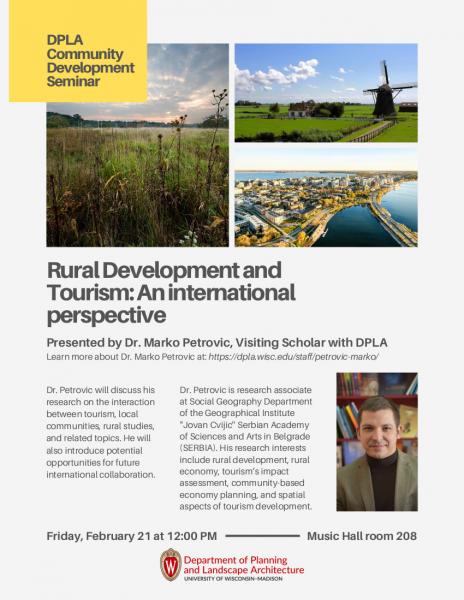
DPLA – Community Development Seminar

Name: DPLA – Community Development Seminar.
Date: February 12, 2020
Venue: Music Hall Room 208, University of Wisconsin – Madison,
Organisers: Department of Planning and Landscape Architecture, University of Wisconsin – Madison
Lecturers: Dr. Makro Petrović


Dr. Marko Petrović, research associate of GI “Jovan Cvijić” SASA, as visiting scholar with DPLA, presented a lecture on theme “Rural Development an Tourism: An international Perspective”.

Photos:

Call for articles or review-chapters: “Water Resources Management: Methods, Applications and Challenges” (Nova Science Publishers, Inc.)

Dear colleagues,
We would like to invite you to submit research articles or review-chapters for the upcoming publication “Water Resources Management: Methods, Applications and Challenges” which will be published by Nova Science Publishers, Inc.

Water resources are considered as one of the vital components of the environment, as well as a basic prerequisite for all human economic and social activities in general. Due to the fact that drinking water could become a scarce resource in the future in most countries, the evaluation of water quantity, as well as water quality has become a significant issue recently. The appearance of global water problems (whether there will be enough water for all and whether its quality is satisfactory) have a major impact on the question of water resources management and sustainable development and the issue of the trade-off between economic growth and water resources. We invite authors, scientists, and professionals involved in the theoretical, methodological and practical studies of water resources management to contribute research articles or review-chapters that will illustrate the continuing effort to understand developments of new techniques, methods, and tools for integrated water resources management. All issues related to water preservation and protection, regulated use, regenerated supply and solving a variety of problems in integrated water resources management are welcome to this monograph.

Enclosure: Call for Chapters_FOR WEBSITE.pdf

Date: November 5, 2019
Source: Geographical Institute “Jovan Cvijic” SASA, Belgrade, Geographical Institute, Serbia

Photos:

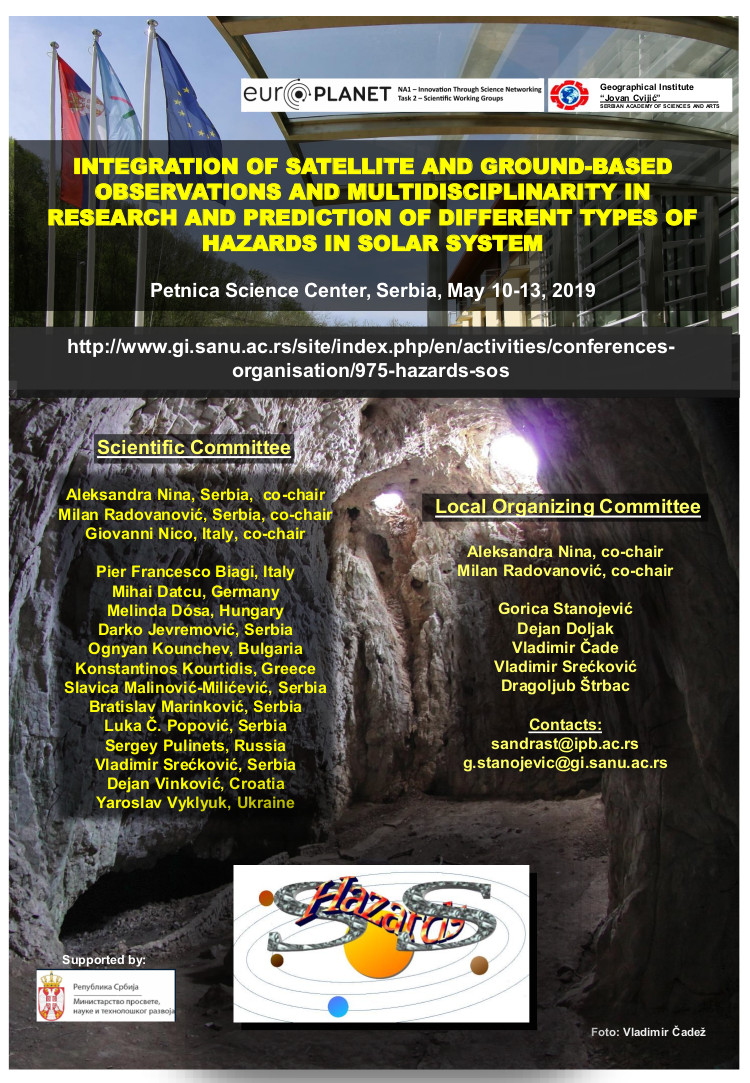
SECOND ANNOUNCEMENT:Integrations of satellite and ground-based observations nad multi-disciplinarity in research and prediction of different types of hazards in Solar system

We would like to invite you to take active participation in the scientific meeting “Integrations of satellite and ground-based observations and multi-disciplinarity in research and prediction of different types of hazards in Solar system”. The event will take place in the Petnica Research Center on 10-13th May 2019, Valjevo.

Enclosure: SECOND ANNOUNCEMENT.pdf

Date: February 13, 2019
Source: Geographical Institute “Jovan Cvijić” SASA, Petnica, Valjevo, Serbia

Photos:

ANNOUNCEMENT: Journal of the Geographical Institute enters Scopus

It is our great pleasure to inform you that Journal of the Geographical Institute “Jovan Cvijić” SASA has been selected for inclusion in Scopus (Elsevier B.V.) by the Content Selection & Advisory Board (CSAB). The publisher will be contacted within the next few months to initiate the indexing process, in order to start adding the content to Scopus.com.

Dear Authors,
It is our great pleasure to inform you that Journal of the Geographical Institute “Jovan Cvijić” SASA has been selected for inclusion in Scopus (Elsevier B.V.) by the Content Selection & Advisory Board (CSAB). The publisher will be contacted within the next few months to initiate the indexing process, in order to start adding the content to Scopus.com.
Sincerely,
Editorial Board

Date: August 10, 2017
Source: SCOPUS, Clarivate Analytics, Philadelphia, PA, USA

Photos:

Call for papers: Special Issue of Sustainability “Natural Disasters and Extreme Solar Energy”

Dear Colleagues,

Academic journal Sustainability is currently accepting submissions for upcoming Special Issue entitled “Natural Disasters and Extreme Solar Energy” (indexed by WoS–SSCI, IF2017: 2.685 and Scopus: Q1), under the supervision of respected guest editors: Dr. Vladimir A. Srećković, Dr. Aleksandra Nina, and Prof. Dr. Milan Radovanović.

The atmosphere is a very sensitive medium to extraterrestrial forces, most importantly, solar electromagnetic radiation and energetic particle intrusion. This released intense solar activity can cause sudden disturbances in the Earth’s atmosphere and further create ground telecommunication interferences, blackouts, transportation problems, water supply problems, potential health effects, as well as natural disasters, such as forest fires. These extreme events can cause billions of dollars of damage and impact individuals, families, communities, and societies. For this reason, it is of crucial importance to investigate the connections between this extreme activity, natural disasters, and further develop ways to prevent, prepare against, and respond to them. The aim of this Special Issue is to engage a wide community of scientists to defragment and expend current knowledge in this field.

We would like to invite you to submit review-papers, case studies, or research articles that formulate innovative approaches related to this field so that these results can be used by other scientists as well as engineers and other people employed in the industry. Potential topics include but are not limited to:

– Natural hazards;

– solar activity;

– Fires;

– Atmosphere modeling and forecasting;

– Remote sensing;

– Public health;

– Transportation safety;

– Telecommunication disturbances;

and other topics that connect risk, disasters, and sustainability.

Deadline for manuscript submissions: 31 December 2019.

Guest Editors:
Dr. Vladimir A. Srećković, The Astrophysics and Ionospheric Laboratory, Institute of Physics Belgrade, University of Belgrade, Belgrade, Serbia
Dr. Aleksandra Nina, The Astrophysics and Ionospheric Laboratory, Institute of Physics Belgrade, University of Belgrade, Belgrade, Serbia
Prof. Dr. Milan Radovanović, Geographical Institute “Jovan Cvijic” of Serbian Academy of Sciences and Arts, Belgrade, Serbia

Date: December 21, 2018
Source: https://www.mdpi.com/journal/sustainability/special_issues/Natural_Disasters_Extreme_Solar_Energy, Belgrade, Geographical Institute, Serbia

Photos:

Call for papers: Special Issue of Sustainability “Contemporary Trends in Sustainable Development: A Double-ECO (edged) Sword”

Dear Colleagues,

We would like to announce the open call for article submissions for upcoming Special Issue entitled “Contemporary Trends in Sustainable Development: A Double-ECO (edged) Sword”, which will be published in the academic journal Sustainability (indexed by WoS–SSCI, IF2017: 2.685 and Scopus: Q1).

The appearance of global environmental problems as a topic in the 1990s had a major impact on the question of sustainable development in the approach to environmental risk and the issue of the trade-off between economic growth and the environment. Regardless, numerous studies have shown that there is no direct trade-off between economic growth and the environment; yet, this issue is topical and related to the question: what is the best way to preserve the environment alongside the economic growth and urbanization of cities and regions? However, today governments, companies, and individuals are becoming more aware that the use of technology and the increase in economic capacity should not negatively affect the environment. This issue attracts attention from diverse fields including ecology, policy making, economics, the use and transfer of technologies, corporate responsibility, tourism, the green economy, and other fields related to this problem.

This Special Issue aims to welcome all comprehensive reviews, case studies, or research articles that formulate innovative theoretical and methodological approaches related to this field. The aim of the research papers in this volume is to promote sustainable development from an ecological economics perspective—a double-edged sword.

Submition deadline: 30 September 2019

Guest Editors:
Dr. Darko B. Vukovic, Geographical Institute “Jovan Cvijic” of Serbian Academy of Sciences and Arts
Dr. Riad Shams, Ural Federal University, Russia
Dr. Aleksandra Vujko, Novi Sad Business School

Themes:
Sustainable development
Global eco trends
Public financial support
Ecology and urbanization
Environmental protection
“Eco“-regional issues
Sustainable green economy
Technological impact
Eco-political problems
Future sustainability challenges
Social responsibility
Public-environmental problems
Urban sustainability
Sustainable tourism

Date: December 21, 2018
Source: https://www.mdpi.com/journal/sustainability/special_issues/contemporary_trends_SD, Belgrade, Geographical Institute, Serbia

Photos:

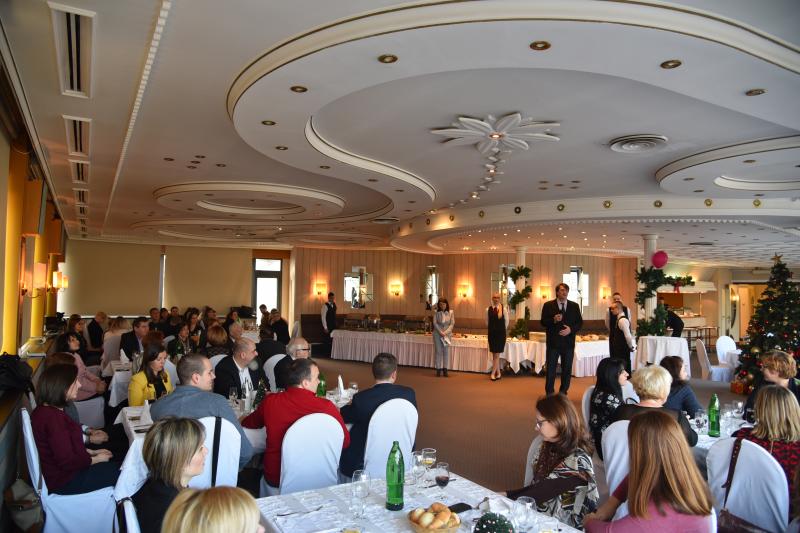
New Year’s Cocktail (2019)

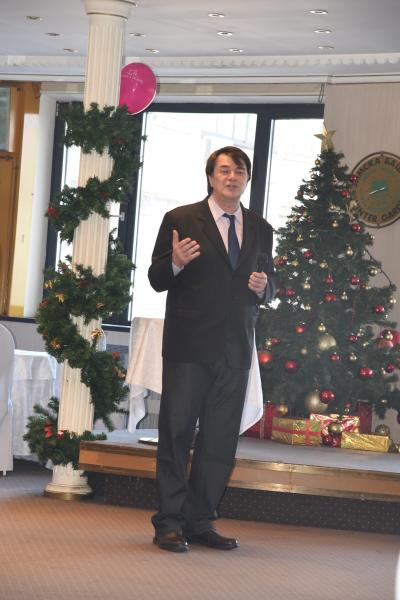
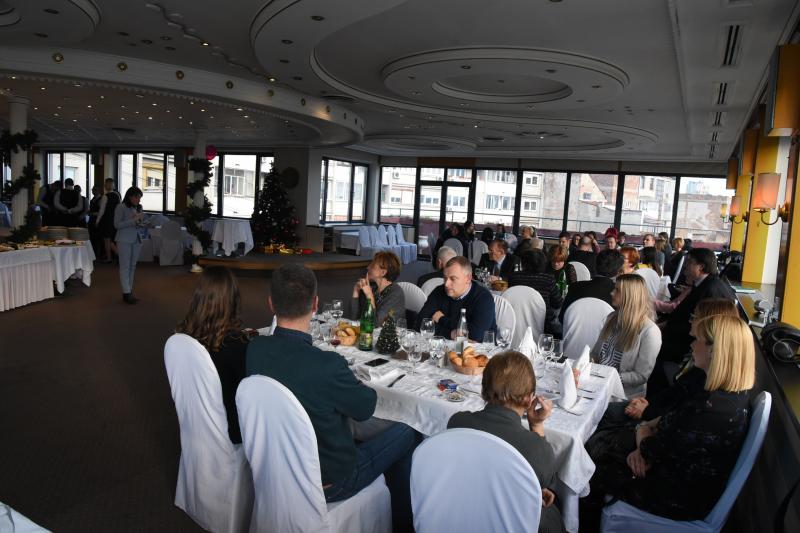
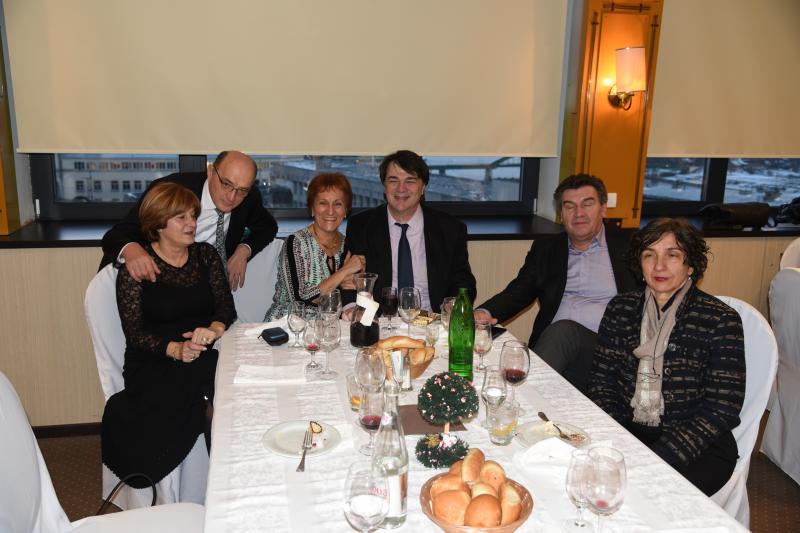
On January 14, 2019, a traditional New Year’s Cocktail was organized by the Geographical Institute. This event was designed as an informal gathering of the present collective, external collaborators and business partners of the Institute, in order to share and celebrate last year’s successes in a pleasant atmosphere.

The Director of the Institute, Milan Radovanovic, addressed and welcomed the guests, and then left the word to Ana Milanovic Pešić, the first deputy director of our Institute, who presented last year’s activities and achievements in the scientific work of associates. The special emphasis was placed on non-project activities and performance in the academic work of individual associates who were also symbolically rewarded on this occasion.

Date: 15.12.2018. године
Source: GI “Jovan Cvijic” SASA, Belgrade

Photos: